

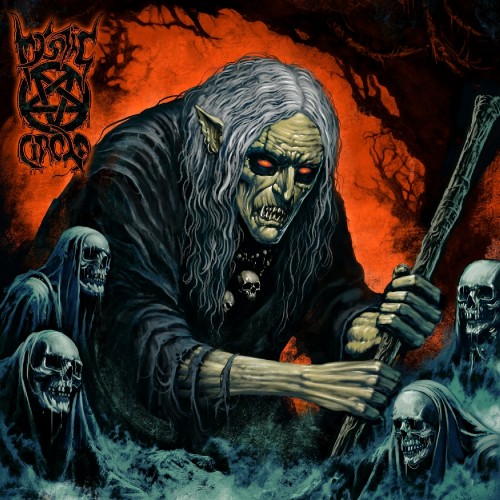
MYSTIC CIRCLE - "Hexenbrand 1486"
Label: ROAR
Track list
1. Luciferian
2. The Scarlet Queen Of Harlots
3. Boogeyman
4. In The Sign Of The Goat
5. Ghost Of Whitechapel
6. Institoris (Heinrich Kramer)
7. The Bible Of Witch Chase
8. Blutschande Unzucht Sodomie
9. Dance On The Wings Of Black Magic
10. Zeugnis Der Verachtung (Outro)
Summoning Fire. Conjuring Echoes.
Iconic German Metallers Mystic Circle enter the depths of infernal history with their new studio album Hexenbrand 1486, launched on October 31, 2025. Mystic Circle evoke the flames of witch persecution and cloak them in black metal fury. With tracks like 'The Bible of Witch Chase' and 'The Scarlet Queen of Harlots', the band sets the stage for a sonic ritual horror, occult symbolism, and unapologetic darkness. Rituals, fire, persecution, and seduction align with the album’s concept title, Hexenbrand — Witch Burning.
"Hexenbrand 1486" makes not only an important contribution to the German Black Metal scene, but also to the genre as a whole, with an aesthetic that perfectly unites fury and multilayered musical patterns. If the pre-released tracks were already an indication of the strength of this new opus, now there is no doubt that "Hexenbrand 1486" is one of Mystic Circle’s most ambitious and thematically cohesive works to date. Revisiting the past through music and lyrics is not simple; therefore, I’m astonished at how well this creation puts all aspects together, conjuring them and letting them scream through blast beats, ritualistic melodies, and infernal imagery. Mystic Circle fuse the ferocity of Black Metal, the melodic sophistication of Symphonic/Melodic Metal, and the anthemic power of Heavy Metal (for example, in the song 'Boogeyman', there are many heavy metal resonances). This blend never gets old and allows them to explore dark, occult, and anti-religious themes with both brutality and beauty — a sound that’s theatrical, aggressive, and unmistakably theirs. Vocals shift between harsh Black Metal shrieks, guttural growls, and occasional theatrical spoken passages. This variety keeps the album dynamic and emphasizes its storytelling. Drumming is relentless on many tracks, with classic Black Metal blast beats driving the chaos; both punishing and purposeful — it fuels the aggression but also adapts to the album’s theatrical concept, almost like a heartbeat.
Choral arrangements also appear throughout the album, enhancing its ritualistic atmosphere and adding a liturgical, almost ceremonial depth.
Now, spotlight on a superb guest collaboration: Sarah Jezebel Deva’s contribution must be emphasized because it elevates the track 'The Scarlet Queen of Harlots into something transcendent. Eerie piano, riffs, and menacing vocals complete the picture along with an old-school solo.
"Hexenbrand 1486" features a trilogy of songs about the inquisitor Heinrich Kramer, with the tracks 'Institoris (Heinrich Kramer'), 'The Bible of Witch Chase', and 'Zeugnis der Verachtung' (epilogue). Heinrich Kramer was the author of the infamous "Malleus Maleficarum", regarded as the standard handbook on witchcraft, which supported almost two centuries of witch-hunting hysteria in Europe.
'The Bible of Witch Chase' fully plunges listeners into this nightmare: the epic and uncompromising soundscape unleashes unholy energy, with relentless riffs and haunting melodies that echo the screams of the innocent. Lyrics channel the paranoia and cruelty of the Inquisition era, painting a sonic portrait of religious fanaticism and persecution. It’s truly a historical horror rendered in metal.
'Luciferian' opens the album with a furious blast of blackened riffs, setting an aggressive tone invoking dark powers. Interesting is its sharp guitar solo, arriving at a moment of heightened drama — a melodic and ritualistic passage that breaks up the classic brutality with something transcendent.
'The Scarlet Queen of Harlots' has an unmistakable intro that adds a flavour of Melodic Heavy Metal and soon develops into a theatrical piece featuring eerie piano and a classic guitar solo. Sarah Jezebel Deva’s guest vocals elevate the track to heights of seductive imagery.
'Boogeyman': a sinister mid-to-fast track with another unmistakable (and menacing) intro that channels fears, blending eerie atmospheres with relentless aggression. Anyway, concerning Boogeyman’s intro, I have a déjà vu feeling… as if I had already heard some notes of this intro somewhere, and after much thinking, searching and consulting myself with my son, I can come to the conclusion that Boogeyman's intro has a kind of pattern that can be found in other songs or even in very different genres, from Skillet's 'Hero', Linkin Park's "Papercut" to Katy Perry's "Dark Horse" and Flame's 'Joyful Noise'. So what's the point? Could it be a so-called ostinato? In music, an ostinato is a short repeating phrase or motif that is persistently played. It seems a pattern recurring in Metal and even in microgenres of electronic music like Witch House, almost everywhere when, aesthetically, occult-inspired themes are employed. In Mystic Circle's 'Boogeyman' the loop is much slower and very original, atmospheric, likely involving a keyboard and fully setting a mystical and moody tension before the Black Metal instrumentation begins.
"In the Sign of the Goat" shows a very classic Black Metal symbolism — the goat as a mark of blasphemy and occult strength, delivered with pounding rhythms.
"Ghost of Whitechapel" is a jewel. Inspired by the Jack the Ripper legend, it conjures Victorian horror through haunting melodies and brutal storytelling. Lead guitar is amazing, following the haunting melodic lines.
'Institoris (Heinrich Kramer)' dives into the madness of witch hunts, with sharp riffs echoing persecution and fanaticism.
'The Bible of Witch Chase' is a conceptual centerpiece, portraying the witch-hunting manual as a weapon of fear and oppression, with crushing instrumentation.
'Blutschande Unzucht Sodomie', sung in German, is raw and visceral, yet one of the most varied and dynamic tracks of the album, both in pace and instrumentation. Its opening (0:00 – ~1:30) is slow and ominous; it then explodes into aggression and energy in full Black Metal fury. Melodic Emergence (~4:00 – 6:00): the aggression gives way to melodic guitar lines that rise out of the chaos. Vocals remain harsh, but the instrumentation introduces a more atmospheric feel. You cannot see the Bridge coming (~6:00 – 7:30): a melodic, almost modern-sounding bridge that is surprising in its clarity. The guitars shift into a more contemporary phrasing, breaking from pure black metal tradition. This section feels experimental, adding freshness to the track. Final Assault & Closing (~7:30 – end): a return to aggression, but with echoes of the melodic bridge still present.
'Dance on the Wings of Black Magic' features ritualistic, hypnotic, occult rhythms based on mid-tempo.
'Zeugnis der Verachtung (Outro)': the closing piece, a dark, slow, atmospheric outro that leaves a lasting impression with a sense of contempt and finality, fading into ominous silence.
While the album is conceptually about witch hunts, in my opinion, it also carries vampiric undertones along with blood-soaked imagery united with a kind of gothic aesthetic, nocturnal vibes, and steps into symphonic territory.
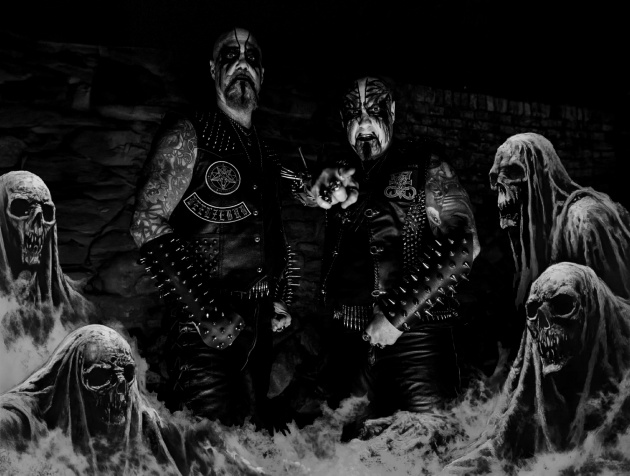
Since their reunion in 2021, the two co-founders of the band, A. Blackwar and Beelzebub, have been unstoppable. From the self-titled album Mystic Circle (released in 2022), through Erzdämon (2023) and the excellent cover compilation Kriegsgötter MMXXV (2025), the band has developed their majestic arsenal, reaching Hexenbrand 1486, their tenth full-length release.
So, brace yourselves for a journey through fire, faith, and fury — where history burns, and the witches rise.
9,9/10
As for my personal rating: this opus deserves a 9.9/10. I reserve the full 10 for Paradise Lost's "Ascension", but Mystic Circle has once again proven their strength with this release.
Hexenbrand 1486 is also available in special vinyl editions that include a 12-page comic, expanding the album’s dark concept into visual storytelling.
dalia di giacomo